
'Almost 70 per cent production time of a vaccine is dedicated to quality control, which is done through several hundred tests.'

North Block is concerned that when India is trying to attract more investment, putting up restrictions on audit firms could create an avoidable bad advertisement.
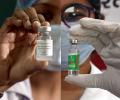
The study by a group of doctors showed that after two shots of the vaccines, 98 per cent recipients of Covishield showed antibody response, while the same was 80 per cent among Covaxin recipients. Sohini Das and Ruchika Chitravanshi report.

Providence will sell up to 30 mn doses of its mRNA vaccine to Biological E. It would also provide the necessary technology transfer to make the vaccine in India, with a minimum production capacity of 600 mn doses in 2022 and targets capacity of 1 bn doses, reports Sohini Das.
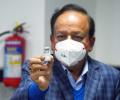
500 million doses per annum from its two sites in Hyderabad and 200 million doses each from its Ankleshwar and Kolar facilities.
Commercial launch and supply to major government and private hospitals is expected in mid-June.

Pune's Mylab Discovery Solutions' CoviSelf, which gives results in 15 minutes, gets ICMR nod

People working at the Nigambodh Ghat -- perhaps the busiest cremation site in the national capital in the wake of outbreak of the pandemic -- go about their job with resilience, helping in whatever way possible.

However, Cipla was very clear it does not want to get into vaccine manufacturing.
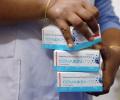
This apart, to further increase capacities, Bharat Biotech has partnered with Indian Immunologicals (IIL) to manufacture the drug substance for Covaxin. The technology transfer process is underway and IIL has the 'capabilities and expertise' to manufacture the inactivated viral vaccines at commercial scale.
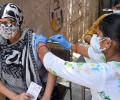
India expects 2.16 billion doses of Covid-19 vaccines between August and December, including the jabs that are currently in clinical trials, reports Sohini Das
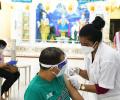
Apollo Hospitals and Fortis Healthcare are open to importing vaccines.
The API of Paracetamol, a fever and pain medication, has grown 25 per cent from Rs 450-480 per kg in December 2020 to Rs 580-600 per kg in April. When compared to the pre-Covid prices of December 2019, the surge is much steeper -- around 140 per cent, reports Sohini Das.

Drugs that are used to treat Covid or used by people as immunity boosters have seen a jump in sales and, in turn, rankings.

Though COVID-19 will wreak more damage to the finances of the Indian population, the insurance sector is unlikely to get hurt.
While players in the financial ecosystem are opening up to the idea of receivables funding for the sector, this market needs a regulator, which a Parliament panel feels only RBI can provide.

While there is a shortage of testing kits, manpower and capacities, India does not have other scalable testing options.
'This government did not have any plan for safety stocks of essential medicines.'
When compared to the domestic sales of April 2019, the growth is around 37 per cent. However, compared to the previous month (March), the growth is 18.4 per cent.

Artificial shortages and brazen hawking of the drug on the streets at 15 times the normal price rule the day as the official machinery tries desperately to stamp out the parallel market, reports Sohini Das
 © 2025 Rediff.com - Investor Information - Advertise with us - Disclaimer - Privacy Policy - Sitemap - Feedback - About us - Terms of use - Grievances